Safes Supplied, Fitted, Opened & Removed Across Hampshire
Boorer Lock & Safe supply and professionally install safes for homes and commercial premises across Hampshire and the surrounding counties — with independent advice on what rating you actually need, and installation and anchoring done properly. Check your insurer’s requirement before you buy a safe, not after.
Choosing a safe — the questions that decide it
- What is the value of what you are storing?
- What is the collective size of the items, and how many are there?
- Do you need fire protection for documents, or for digital media — they are different ratings
- Do you need water protection?
- Where will it go, and what is the floor made of?
- How often will you open it?
- How do you want to open it — key, PIN code, combination dial or biometric?
Ratings, and what your insurer means by them
Safes carry EN standard certifications and a cash rating. As a general rule an insurer will cover cash up to the stated cash rating, and valuables up to ten times that rating — so a £10,000 cash-rated safe typically covers £100,000 of valuables. Always confirm the figure with your own insurer; the rating is the safe’s, the cover is theirs.
- EN14450 secure safe cabinets — grades S1 and S2, the entry level, for lower values
- EN1143-1 high security safes — grades 0 to 7, with cash ratings running from around £6,000 up to £250,000
- EN1143-2 deposit safes — grades 1 to 5, where cash goes in without the safe being opened
Types we install
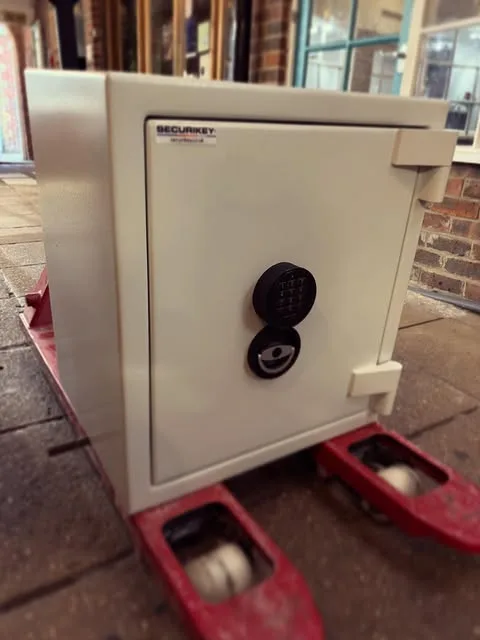
- Free-standing safes — the most common, anchored to floor or wall
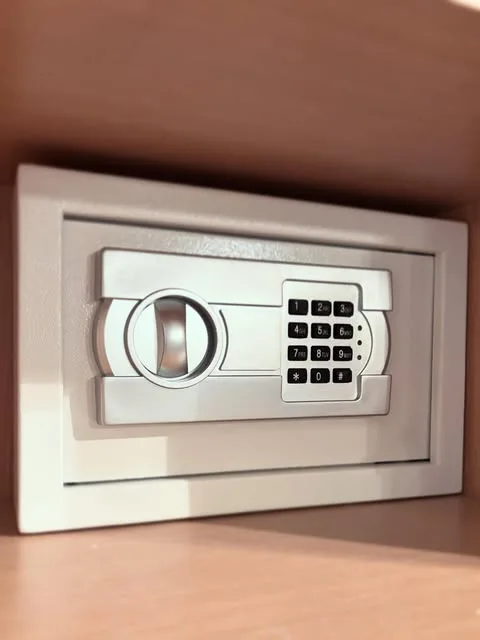
- Wall safes — set into the wall and made good around
- Underfloor safes — set into the floor, the hardest to attack and to find
Installation and anchoring
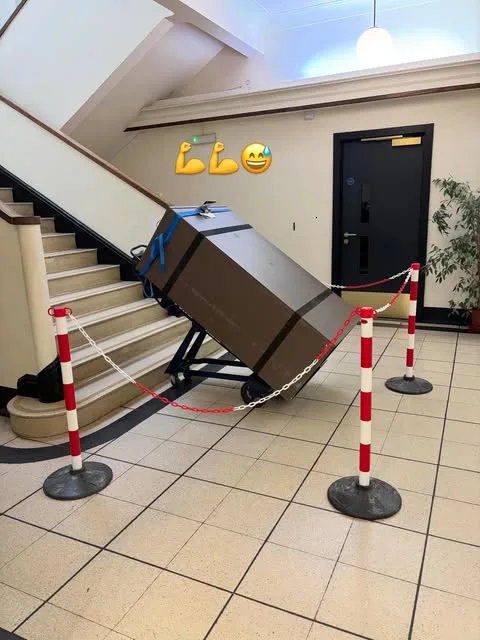
A safe that is not fixed down is a box somebody can carry away and open somewhere else at their leisure. Safes up to one tonne require professional installation and anchoring, and insurers generally require it. Installation here includes getting the safe into the building — which, with a heavy safe up a staircase, is most of the job.
Safes you already have
- Safe opening — lost keys, lost or failed combination, jammed or seized lockwork
- Redundant safe removal, including heavy safes out of awkward buildings
- Safe reconditioning — new lockwork, refinishing, bringing an old safe back into use
- Independent advice, including on safes you have been quoted for elsewhere
Some of our own work
Common questions
What cash rating do I need?
Ask your insurer first — they will state a cash rating in the policy, and that number is the one that matters. As a rule of thumb, cover runs to the cash rating for cash, and around ten times that for valuables. Buying above the requirement is fine; buying below it can invalidate a claim.
Does a security safe protect against fire?
Not automatically. Security ratings and fire ratings are separate certifications, and a high security safe is not necessarily fire rated. Fire protection for paper documents and fire protection for digital media are also different ratings, because data fails at a much lower temperature than paper chars.
Does the safe have to be bolted down?
In practice, yes, and most insurers require it. Anything up to about a tonne can be moved by a determined thief with a trolley. Anchoring into concrete or into the structure is what makes the rating mean anything.
I have lost the key or forgotten the combination — can you open it?
Yes. Safe opening is a routine part of the work, and wherever possible the safe is opened in a way that lets it go back into service with new lockwork rather than being destroyed.
Can you take away a safe I no longer want?
Yes — redundant safe removal, including old safes in cellars, upper floors and buildings that were built around them.
Should I buy a safe online and get you to fit it?
You can, but it is worth a conversation first. The commonest expensive mistake is buying a rating that does not match the insurance requirement, or a size that will not take what it is meant to hold. Advice is given independently, and costs nothing.
Safes in Petersfield & across Hampshire
Free, no-obligation surveys in the Hampshire area. All work guaranteed for one year.